Atlas Parking Lot Solutions
Striping · Sealcoating · Wheel stops · Signage
Greensboro, NC • Serving North Carolina
Professional asphalt sealcoating that extends pavement life from roughly 10–12 years to 15–20 years. UV protection, water resistance, and enhanced curb appeal for Winston-Salem commercial properties.
Winston-Salem's hot summers and freeze-thaw winter cycles create harsh conditions for unprotected asphalt. UV rays cause oxidation and fading; water penetration leads to cracks, potholes, and crumbling edges.
Unprotected asphalt breaks down well before its expected lifespan. With proper sealcoating applied every 2–3 years, you can extend pavement life from roughly 10–12 years to 15–20 years and avoid costly resurfacing.
Sealcoating also improves appearance (deeper black color, professional look) and reduces maintenance costs by protecting against oil, gasoline, and weather damage.
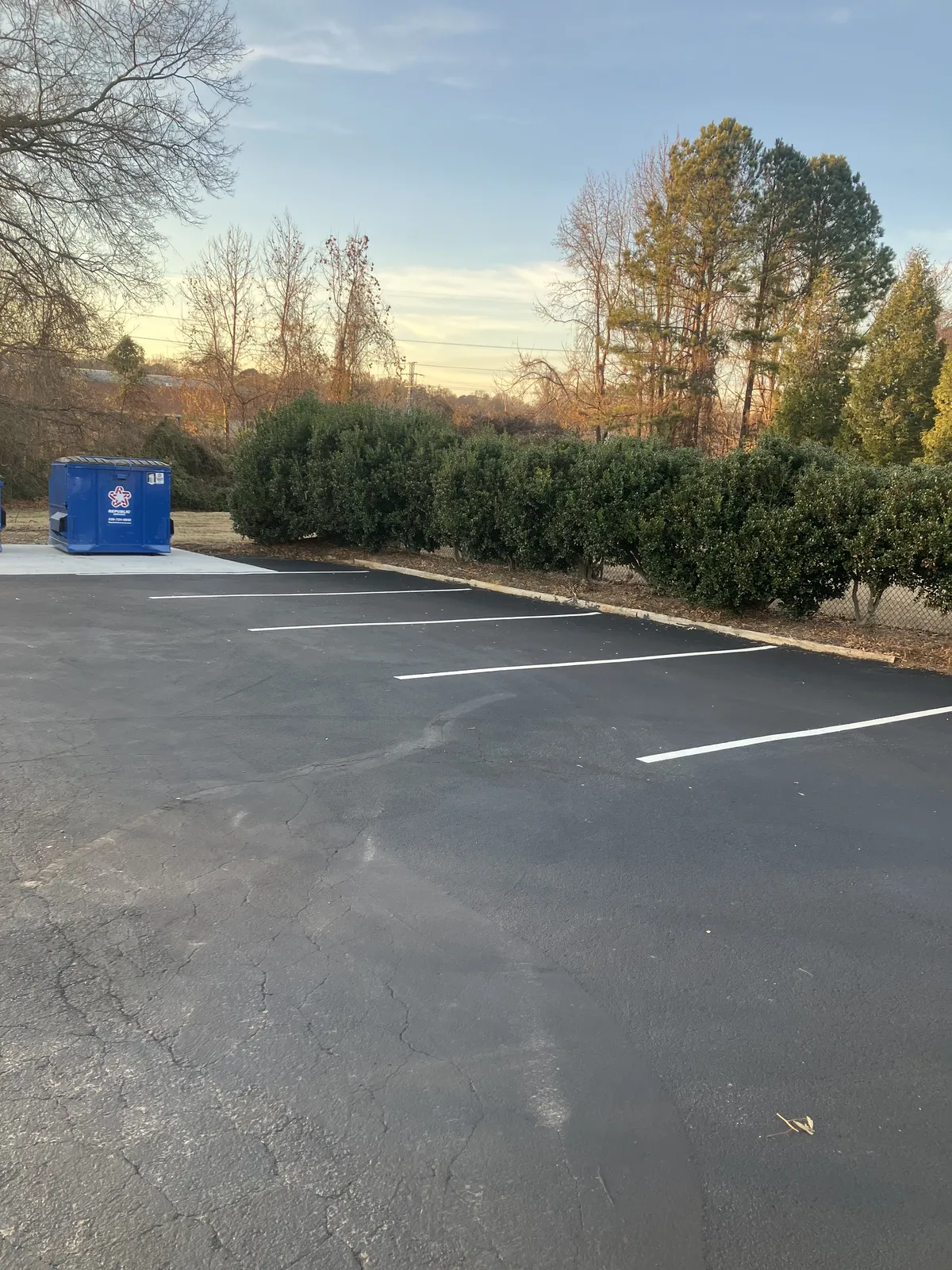
Step 1: Surface Assessment — We inspect for cracks, potholes, oil stains, and readiness for seal application. Existing damage is addressed first.
Step 2: Crack Filling — All cracks and larger damage are filled with rubberized asphalt filler to prevent water infiltration.
Step 3: Pressure Washing — Surface is pressure-washed to remove dirt, oil, and debris for optimal adhesion.
Step 4: Sealcoat Application — 2 coats of premium sealcoat (coal-tar, acrylic, or bio-based) are applied, creating a protective barrier against UV, water, and chemicals.
Benefits: Extends pavement life from roughly 10–12 years to 15–20 years, prevents costly repairs, enhances curb appeal, reduces maintenance spending, protects investment.
The situation: A Winston-Salem office lot several years past its last seal. UV exposure had faded the surface from black to grey, hairline cracks were opening across the drive lanes, and oil staining had built up near the entrance. The owner was weighing sealing against repaving.
How we approach it: Clean the surface first, fill the cracks, then seal — in that order. Sealcoat applied over dirt or open cracks does not bond and does not last. We phase the work section by section so the lot never fully closes during business hours.
The outcome: A restored black surface and, more importantly, a sealed one — UV and water kept out of the asphalt binder. Sealing on a sensible cycle costs a small fraction of repaving the same lot.
Illustrative example of how we approach sealcoating, not a specific client project.
Typical timeline: 1–2 days, plus 48-hour cure
Clean, crack fill, seal
Get a QuoteTypical timeline: 2–4 days, plus 48-hour cure
Phased so the lot stays partly open
Get a QuoteTypical timeline: 4–7 days, plus 48-hour cure
Multi-phase scheduling around your operating hours
Get a QuoteWhat drives the price: square footage, how much crack filling the surface needs first, how many coats the lot calls for, and access. Maintenance schedule: most lots want resealing every two to three years, with an annual look to catch new cracks early. Request a free on-site assessment.
After 48 hours, the surface is typically drivable, but we recommend waiting for full cure (up to 72 hours in cool/humid conditions). We rope off the lot during cure time and provide access for emergency vehicles if needed.
Coal-tar is more durable (3–5 years) but higher VOC content; acrylic is eco-friendlier and easier to maintain (2–3 years). We recommend coal-tar for high-traffic areas, acrylic for environmentally conscious properties.
Not effectively. Stains prevent adhesion and will resurface after sealing. We recommend spot degreasing or full pressure washing before sealcoat for best results.
Every 2–3 years is ideal. High-traffic lots may need resealing every 18–24 months. Annual inspections help us recommend timing based on UV fading and crack development.
Get a free sealcoating estimate today. No obligation, full transparency.
Request Free Sealcoating Estimate