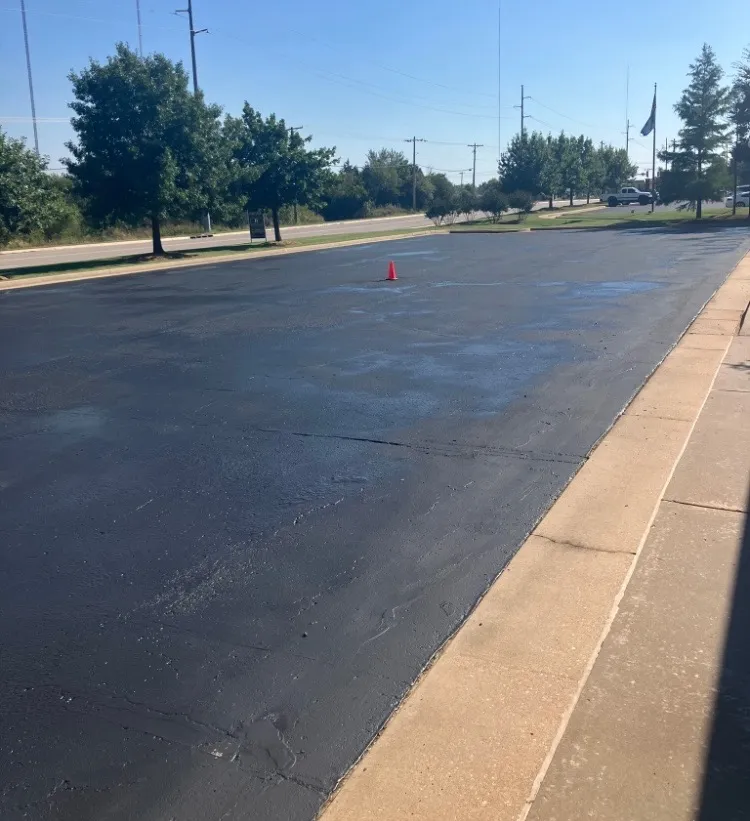
This isn't a pitch to scare you away from doing anything yourself — plenty of lot upkeep genuinely is fine to DIY, and we'll say exactly which tasks those are. But for the services that make up most of a parking lot's maintenance budget — sealcoating, striping, crack filling, pressure washing — the pattern we see over and over is that DIY looks cheaper on day one and ends up costing more once you count what has to be redone.
The real cost comparison
| Service | What DIY really takes | Typical DIY durability | Typical professional durability |
|---|---|---|---|
| Pressure washing (30,000 sq ft) | Equipment rental + roughly 16 hours of labor | Inconsistent; real risk of etching the asphalt | Pressure matched to surface; consistent result |
| Crack filling (500 linear ft) | Filler material + roughly 8 hours of labor | Shallow fill; water often gets in underneath anyway | Deep, routed fill that actually seals the crack |
| Striping (150-space lot) | Paint, stencils + 20–25 hours of labor | 12–18 months — poor adhesion over an unprepped surface | 24–36 months with proper surface prep |
| Sealcoating (30,000 sq ft) | Sealer material + 20–30 hours of labor | 12–18 months, and often fails outright | 3–5 years |
The core issue: DIY typically delivers roughly a third of the service life for a job that isn't proportionally cheaper once you count materials, equipment rental, and your own time. Divide the cost by the years you actually get, and the apparent savings tend to disappear — before you even count the cost of redoing it.
Why DIY projects fail — the mechanics behind it
Inadequate equipment
A rented consumer-grade pressure washer typically runs around 2,000 PSI with a single manual nozzle and no way to fine-tune pressure by surface. That produces inconsistent cleaning, real risk of edge damage on asphalt, and no hot-water or degreaser-injection option for cutting through oil. Commercial equipment — 3,000 to 3,500 PSI, calibrated nozzles, hot water, degreaser injection — is maintained and calibrated specifically for this work.
Skipped surface preparation
"Striping doesn't need surface prep, let's just paint over the existing lot" is one of the most common DIY assumptions, and it's the fastest route to a failed job. Paint bonds poorly to dirt, oil, and weathered oxidation — within 6 to 12 months it starts peeling, usually in the drive lanes first where tires work at it hardest. Redoing the job then costs more than the skipped prep step would have.
Incorrect application technique
A common sealcoat mistake is applying one thick coat instead of two thin ones. A thick coat dries unevenly — the top hardens while the interior stays wet — which means poor adhesion and often outright peeling within 6 to 12 months, leaving the lot looking worse than before it was touched. The professional technique (two thin coats, four to six hours apart) cures evenly and bonds properly, which is why it lasts years instead of months.
Liability and insurance
If a customer slips on a lot where paint or sealer created an unexpectedly slick finish, or hits a pothole from a poorly executed patch, the property owner carries that liability directly. Professional work is typically bonded and insured, so if something does go wrong, the contractor's coverage is there to respond — with DIY work, that responsibility sits with you personally.
Where DIY genuinely makes sense
- Debris cleanup — raking leaves, clearing branches, general trash pickup. Low risk, low skill requirement.
- Routine sweeping and blowing — surface debris removal carries minimal risk either way.
- Small touch-ups, if a contractor has confirmed the surface is properly prepped and you're using the correct paint type.
Where it's worth hiring a professional every time
Pressure washing
Crack filling
Sealcoating
Striping
Pothole repair
How a DIY sealcoat typically fails, step by step
The pattern is consistent enough to be predictable. A property owner decides to seal a lot over a weekend, rents equipment, buys budget sealer, and brings in some help. The pressure wash often gets skipped to save time, so the sealer never really bonds. One thick coat goes down instead of two thin ones, which cures unevenly. Curing gets cut short — overnight in cool, humid weather that actually needed 48-plus hours — and the lot reopens before the surface has fully set.
What follows is fairly predictable: tire marks and footprints set permanently into the still-soft surface, peeling and cracking within a few months, and often complete failure within half a year — leaving the lot looking worse than before it was touched. The part that catches people out is that a failed DIY seal isn't a neutral starting point; the failed layer has to be removed before a new one can be applied properly, which is why remediation often costs more than the original professional quote would have.
The five-year view
Zoom out and the two paths diverge clearly. The DIY path often looks like: seal it yourself in year one, spend year two on touch-ups and patching where the seal lifted, reseal properly in year three because the first attempt failed, stripe it yourself in year four, then handle emergency pothole repairs in year five. The total outlay tends to land higher than the professional path — and that's before counting the weekends spent on it.
The professional path looks more like: a proper seal in year one that actually lasts, light routine maintenance in year two, nothing needed in year three, a scheduled reseal around year four, and a lot still presenting well at year five. Fewer interventions, each one planned rather than urgent. The real gap isn't the sticker price of any single job — it's that work which fails early has to be paid for twice.
Is DIY ever actually cheaper long-term?
For low-skill, low-risk tasks like debris removal and sweeping, yes. For sealcoating, striping, and crack filling, the pattern we consistently see is that DIY's shorter lifespan and higher failure rate erase the upfront savings once you divide cost by years of service.
What if I've already started a DIY project and it's not going well?
Call us before finishing it. In some cases we can build on partial work; in others, it's cheaper to correct course early rather than complete a project that will need to be redone anyway.
Do you ever recommend a hybrid approach?
Sometimes — debris cleanup and basic sweeping are reasonable to keep in-house, while sealcoating, striping, and crack filling stay with a professional crew. We're happy to talk through what makes sense for your property and budget.
Get an honest assessment before you decide
We'll walk your lot, tell you what genuinely needs a professional crew and what doesn't, and quote it straight — no upselling.