Ask a property manager what pressure washing is for and most will say "curb appeal." That's true, but it undersells the job. Grime sitting on a parking lot isn't inert — oil seeps into porous asphalt and weakens the binder holding it together, mold traps moisture against the surface and speeds up freeze-thaw damage, and years of build-up create exactly the wrong surface for sealcoat or paint to bond to. Cleaning is maintenance, not decoration.
This guide covers when to use high-pressure washing versus a gentler soft-wash, why surface prep makes or breaks your next sealcoat or striping job, and how to avoid the mistakes that turn a cleaning job into a repair bill.
What a dirty lot actually costs you
A few things happen on a lot that goes uncleaned for a long stretch, and none of them are purely cosmetic:
- Oil and grease soak in. Left long enough, petroleum products don't just stain asphalt — they migrate into the pavement and soften the binder that holds the aggregate together, leaving that area more vulnerable to rutting and breakdown under traffic.
- Mold and algae hold moisture against the surface. In North Carolina's humid climate, shaded and low-lying areas of a lot can stay damp longer than they should, and that trapped moisture accelerates freeze-thaw damage once winter arrives.
- First impressions add up. A lot that looks neglected reads as a business that's neglected, fairly or not — and that's before a single square foot of pavement actually fails.
The real cost of putting off a cleaning isn't the cleaning bill you avoided — it's the extra wear that accumulated while you waited, and the fact that it pulls your next resurfacing decision closer.
High-pressure vs. soft-wash: picking the right method
High-Pressure Washing
Soft-Wash Cleaning
Our default on a mixed-surface property is to soft-wash the asphalt and reserve higher pressure for concrete curbs, dumpster pads, and loading docks — asphalt and concrete simply don't tolerate the same treatment, and using one setting across the whole property is how good intentions turn into etched pavement.
Why this matters before sealcoating or striping
This is where cleaning stops being cosmetic and becomes structural. Sealcoat needs to bond directly to the asphalt surface — if there's a layer of dirt, oil film, or weathered oxidation between the pavement and the sealer, the coating is really just sitting on top of that layer, not bonded to the pavement underneath. It looks fine on day one and starts peeling within a matter of months. The same logic applies to striping paint: it needs clean asphalt to grip, and paint applied over grime tends to lift in the drive lanes first, right where the tires work at it hardest.
Clean the surface → let it dry fully → sealcoat → let the seal cure → stripe. Skipping the cleaning step to save a day is one of the most common reasons a "3 to 5 year" sealcoat job fails within its first year.
Dealing with oil and grease stains realistically
Not all oil stains respond the same way, and it's worth setting expectations before the crew shows up:
- Fresh stains (a few months old): Respond well to a soft-wash degreaser and rinse — usually the large majority of the stain lifts in one pass.
- Set-in stains (six months to two years): Need degreaser, hot water, and often more than one pass. Expect meaningful improvement, not perfection.
- Deeply embedded stains (two-plus years): The oil has soaked into the pavement structure itself. Pressure washing alone typically won't fully remove these — a poultice treatment (a chemical paste left to sit and draw the oil out) or localized patching are the realistic options if full removal matters.
The practical takeaway: a stain caught early comes out easily; a stain that's had two years to soak in usually won't come out completely no matter what's used on it. Routine cleaning is what keeps stains in the "easy" category.
Will pressure washing damage my asphalt?
Not if it's done correctly — but asphalt does have real limits, and the most common way to damage it is simply turning up the pressure too far in the wrong spot. Excess PSI (roughly above 3,500 on asphalt) can cause surface spalling, where small chunks of the surface flake off and create new entry points for water. Edges and joints are the most vulnerable areas and take damage fastest under aggressive pressure. Our approach is to start on the low end of the range and only increase pressure where the surface genuinely needs it, checking as we go rather than running one setting across the whole lot.
How often should you clean?
| Lot type | Recommended cleaning frequency |
|---|---|
| High-traffic (retail, quick-service, shopping centers) | Quarterly to biannual deep clean, with lighter cleanup monthly |
| Medium-traffic (office parks, apartments, medical) | Biannual — spring and fall — plus routine debris removal |
| Low-traffic (residential, light industrial) | Annual cleaning, with spot cleaning as needed |
North Carolina's seasons add their own rhythm on top of traffic volume: a spring wash to remove winter salt residue, extra attention in humid summer months when mold and algae grow fastest, thorough leaf and debris cleanup in fall, and light cleanup only (no pressure washing) once temperatures are consistently near freezing, since water can refreeze in cracks and joints and add damage rather than prevent it.
Runoff, drainage, and doing it responsibly
Pressure washing runoff isn't something to just let flow to the nearest storm drain — federal stormwater rules and many local ordinances (Greensboro included) restrict discharging wash water, oil, and detergent residue into storm drains. On our jobs, that means using biodegradable detergents wherever possible, directing water away from drains and landscaping, and using containment methods on larger jobs where runoff volume is significant. If your property has specific sustainability requirements, we can also use fully biodegradable cleaning products on request.
What a full lot clean actually looks like
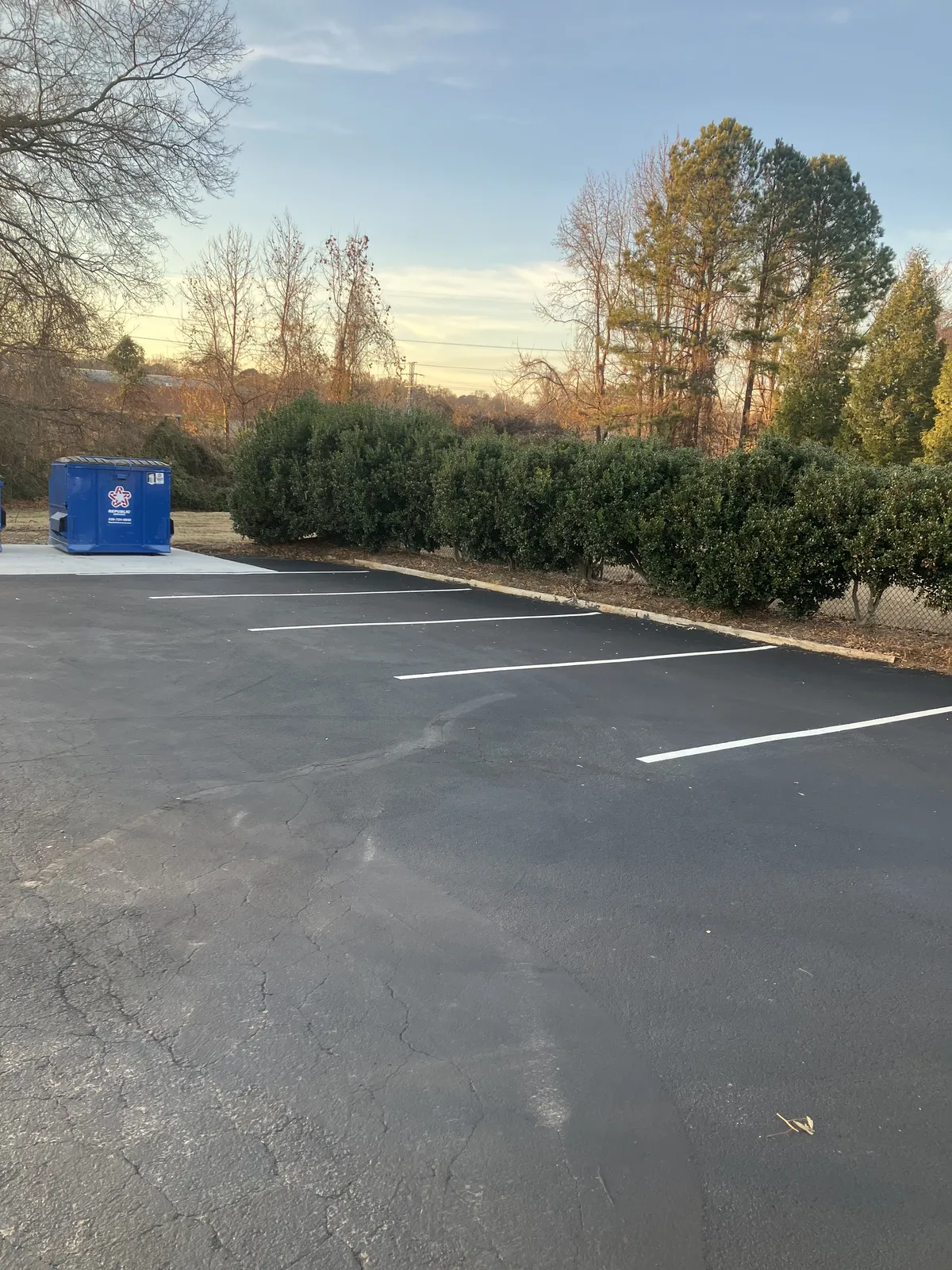
A neglected retail lot usually presents the same way: years of accumulated grime across the whole surface, concentrated oil staining near entrances where cars idle, mold on shaded concrete curbs, and striping that's faded under the dirt rather than worn away by traffic. The mistake we see most often from DIY attempts is treating the whole lot with one pressure setting. Asphalt doesn't tolerate what concrete does. A correct sequence looks more like: soft-wash the asphalt and let the degreaser do the work rather than the pressure, step up pressure only on concrete curbs and loading zones, poultice the worst embedded oil spots and let them sit rather than grinding at them, and let everything dry fully before scheduling any striping or sealing.
What to realistically expect: surface oil and grime come up almost entirely, deeply set stains improve noticeably without fully disappearing, and mold and algae clear completely and generally stay gone for a good stretch of the year. The real payoff is a surface that's actually ready for sealcoat or paint to bond to properly.
Common mistakes we see
- Using consumer-grade rental equipment. Rental washers are unpredictable, nozzles aren't calibrated for asphalt, and there's no training behind the wand — the result is either damage or a lot that's still dirty.
- Waiting too long between cleanings. Oil that's been given years to soak in becomes structurally embedded rather than surface-level, and later cleaning only ever gets the top layer.
- Skipping cleaning before sealcoat. It's the equivalent of painting over rust — the new coat looks fine until it starts lifting.
- Not inspecting afterward. Some pressure-washing damage shows up immediately (spalling); some emerges slowly. A post-wash check catches problems while they're still small.
Will pressure washing remove all stains permanently?
No — deeply embedded stains that have had years to soak in typically can't be fully removed with pressure alone. Expect meaningful improvement rather than a perfect result on old stains; fresh stains respond far better.
How long until the lot can be used after pressure washing?
Most lots are usable within two to four hours. In humid or cool conditions, full drying can take longer. We typically schedule cleaning early in the day so the lot is ready by afternoon business hours.
Can I pressure wash my own lot with rental equipment?
Technically yes, but the risk is real — rental equipment is often inconsistent and comes with a limited nozzle set, and asphalt is less forgiving than most people expect. Professional cleaning generally costs less than repairing pavement that's been etched by an over-pressured rental unit.
Should I pressure wash before or after sealcoating?
Always before. Clean surface, then sealcoat, then let it cure fully before opening to traffic. Pressure washing a fresh sealcoat will tear it apart.
Get a free on-site cleaning assessment
We'll walk your property, recommend the right method for each surface, and give you a fixed, upfront quote — no surprises.