
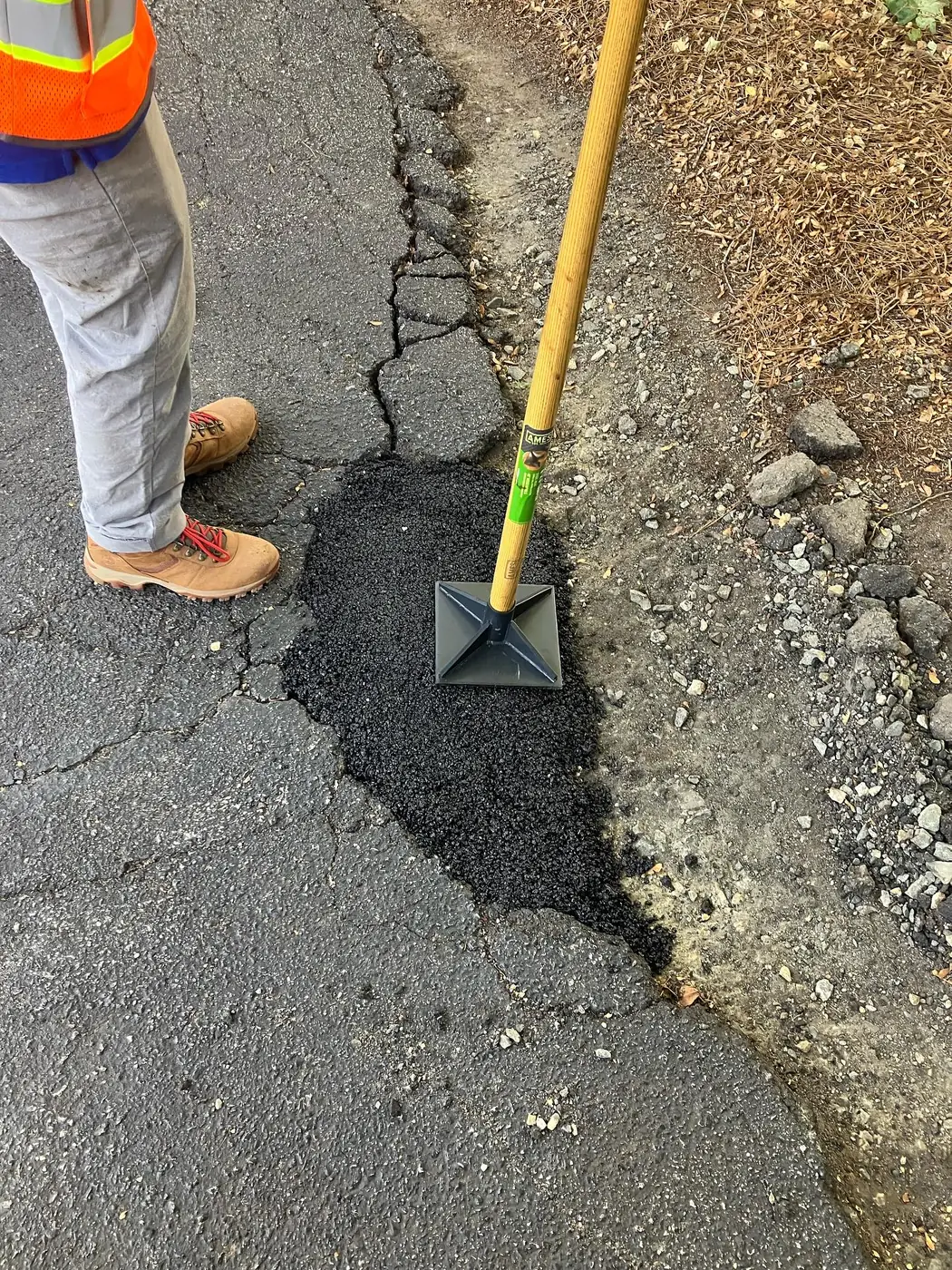
Property managers often get two quotes that sound like different planets: a cheap patch and a full pave. The useful question is not which vendor is cheaper. It is whether water has already ruined the base.
The walk test
- Edges of the hole: Clean break in an otherwise tight surface → usually a repair. Alligator skin running out from the hole → the failure is bigger than the crater.
- What is in the hole: Loose asphalt you can scoop → surface failure. Mud that pumps when a tire rolls → the base is gone.
- How many: One dumpster-pad hole is a section. A constellation across the drive aisle is a paving conversation.
- Last winter: A hole that reopened after a patch was not a materials problem. The water path is still there.
Why a leftover hole gets expensive
A small pothole left alone tends to grow each season. Freeze-thaw in the Piedmont is enough. Water enters, expands, and the next car knocks another edge off. That is why crack filling is still the highest-value preventive work — it is how you stop the next hole — and why we will not sealcoat over an open crater. Sealcoating is a protective coat, not a structural repair.
What Atlas will quote
On a sound lot: map the holes, restore the base in the failed spots, fill the feeder cracks, and only then talk sealcoat or restripe. That is pothole repair in Greensboro.
On a failed lot: we pave it. The honesty rule is already in how we work — if the asphalt has failed structurally, it needs paving, not sealing. Read parking lot paving in Greensboro.
What this is not
This is not a price list. Atlas does not publish prices. It is not a highway-paving brochure. We work parking lots. And it is not permission to wait until spring “to see.” Spring is when last year’s crack is this year’s hole.
Can I just fill it with bag mix from the hardware store?
A temporary hold in a dry hole can get you through a weekend. It does not restore the base. The next freeze usually wins.
Should I pave if I also need ADA work?
Fix the surface first so the new stall math is painted on something that will last. Use the ADA calculator for a planning count, then we measure on the walk.
Want the walk, not a guess?
Call (336) 662-3312 or send the address. We will tell you patch, section, or pave.