
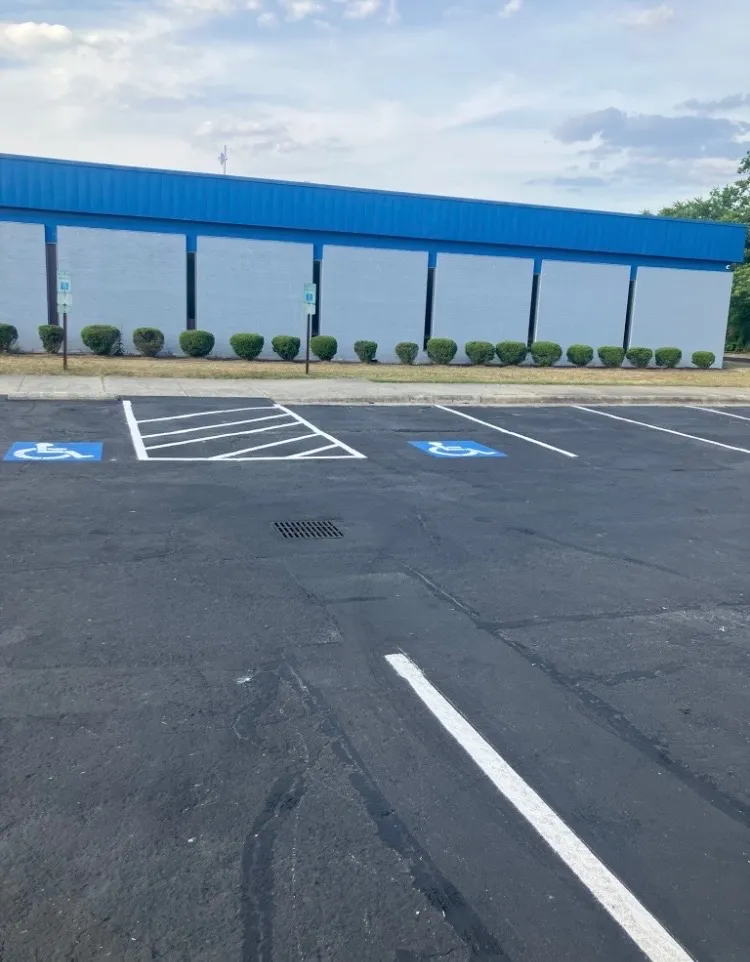
Your parking lot faces a different fight every season. Summer UV bakes and hardens the surface. Winter freeze-thaw cycles pry cracks open a little wider every day it's below freezing. Spring rain finds every drainage weakness that's been quietly developing. Fall leaves clog the drains that were supposed to handle that rain.
None of it is random, which is actually good news — it means a predictable, seasonal inspection routine catches almost everything before it turns into an emergency repair. This is the checklist we use with our own maintenance clients across the Piedmont Triad, organized by season.
Winter (December – February): freeze-thaw and ice management
Water gets into existing cracks, freezes, and expands — physically forcing the crack wider. It thaws, lets in a little more water, and freezes again. Repeated daily across a Piedmont Triad winter, this is the single biggest driver of new pavement damage.
- Clear snow within 24 hours. Delayed removal traps moisture underneath the ice and lets it work on the pavement longer.
- Go easy on salt. Excess salt accelerates surface deterioration; use the minimum needed and sweep up residue once temperatures rise.
- Check drain lines for ice blockages. A blocked drain during a freeze means standing water with nowhere to go.
- Inspect existing cracks for ice buildup and avoid packing rock salt directly into cracks, which can worsen the damage rather than fix it.
- Check that fire lanes and reserved markings are still visible through any snow cover — a safety issue during a storm, not just a compliance one.
- Mark and monitor potholes. Winter potholes can expand quickly; flag them for priority repair once spring weather allows patching.
Spring (March – May): drainage and post-winter damage assessment
Melting snow and spring rain reveal every crack, void, and drainage weakness that developed over winter. This is the season to find out exactly what the freeze-thaw cycle did to your lot.
- Walk the entire lot and photograph damage. Compare against last fall's condition if you have it — new cracks and voids are easiest to spot right now.
- Pressure wash to remove salt residue, typically in early March. Salt trapped on the surface accelerates oxidation if left through summer.
- Clear every storm drain and catch basin of winter debris — this is the single most effective thing you can do to prevent standing water later.
- Prioritize pothole repair while temperatures are moderate — ideal patching conditions before summer heat.
- Get crack-filling quotes for anything wider than about a quarter inch, especially before summer heat expands them further.
- Plan sealcoating for late spring if your lot is due — April through June is prime sealing season before peak summer UV exposure.
Summer (June – August): UV oxidation and heat stress
Intense UV exposure dries out the asphalt binder, hardening the surface and making it more brittle. Heat expands existing cracks, and high traffic wears on damage that's already there.
- Clean stains quickly. Oil, grease, and tire marks accelerate oxidation on the spots where they sit — don't let them soak in over a full summer.
- Remove debris after storms. Summer storms drop branches and litter; sweeping promptly keeps moisture from getting trapped underneath.
- Check drainage after heavy rain. Water that's still pooling more than a day later usually points to a blockage or a low spot that's settling.
- Watch marking visibility. If stripes are less than half visible, plan restriping for September or October rather than peak summer.
- Track known cracks. Photograph or mark them; if they're visibly widening, flag them for fall repair before winter arrives.
Fall (September – November): the most important prep season
Falling leaves clog drains and trap moisture against the surface — moisture that freezes come winter and creates new cracks. Fall is your last real window to get ahead of that.
- Clear leaves weekly, September through November. Leaves in drains mean water backup, which means winter damage.
- Have drains professionally cleared once peak leaf-fall has passed — clogged drainage is behind a large share of the worst winter damage we see.
- Refresh striping now if needed, before winter reduces visibility further. ADA spaces and fire lanes especially need to be clear before the first snow.
- Fill every crack over a quarter inch wide before the ground freezes — this is genuinely your last practical chance before winter's freeze-thaw cycles take over.
- Sealcoat now if it's on your cycle. September and October offer ideal application temperatures and gets protection in place before winter stress begins.
- Walk the lot in mid-November and document any open issues for your contractor before winter arrives in earnest.
Every month, all year: the two-minute walk-through
| What to look for | If you see it |
|---|---|
| New or widening cracks | Photograph, mark the location, get a filling quote if wider than ¼ inch |
| Potholes | Report immediately — it's a safety hazard — and get an emergency repair quote |
| Standing water after rain | Should drain within about 24 hours; if it doesn't, check for a blocked drain or settling |
| Oil or grease stains | Schedule pressure washing within a week or two — older stains are harder to fully remove |
| Faded fire lanes or ADA markings | Schedule restriping — this is a safety and compliance issue, not just cosmetic |
| Debris buildup | Clear it — trapped moisture underneath accelerates deterioration |
Why the Piedmont Triad climate makes this schedule non-negotiable
Greensboro, Winston-Salem, High Point, and Kernersville share a climate pattern that's genuinely tougher on pavement than a milder region: repeated freeze-thaw swings through winter (not one hard freeze, but many cycles), heavy spring rainfall that tests every drainage weak point, sustained summer heat that accelerates UV oxidation, and sharp fall temperature swings that stress pavement right as leaf debris is clogging the drains. None of these are avoidable — but a seasonal routine turns them from surprises into a predictable maintenance calendar.
A simple annual rhythm to work from
Winter
Spring
Summer
Fall
A modest, predictable annual maintenance spend is what keeps you out of an unplanned resurfacing project years before you actually needed one.
How many freeze-thaw cycles does the Piedmont Triad typically see each winter?
The region regularly sees repeated swings above and below freezing across December through February, sometimes into March — not a single deep freeze, but many separate cycles, each one an opportunity for water in a crack to expand and push it wider.
Can I combine seasonal tasks into one visit instead of spreading them out?
To a point — crack filling, pressure washing, and sealcoating are often bundled into a single spring or fall visit. Snow removal and drainage checks, though, really do need to happen on their own schedule as conditions demand.
What's the single highest-impact task on this whole list?
Clearing drains before winter. Blocked drainage is behind a large share of the most expensive winter damage we see, and it's one of the cheapest problems to prevent.
Want a maintenance calendar built around your specific property?
We'll walk your lot, note what's due each season, and set up a plan that fits your budget — so nothing turns into an emergency.